Computer vision · Coursework
Border Surveillance Detection
The pre-project behind our capstone: an AI plan for border cameras, with vehicle tracking that links the same car across two cameras.
Course · Team of 3 · CEPP pre-project
My contribution
A team project with the same two teammates as our capstone; the progress reports do not split the work between us.
- Worked with my two teammates on the officer interviews, the system plan and the detection experiments.
Try it
See what it can do
KMITL · 01076016 Computer Engineering Project Preparation · 2025–26 semester 2
What this project does
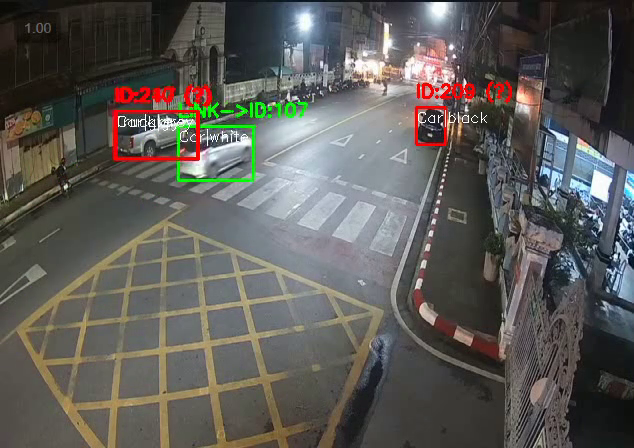
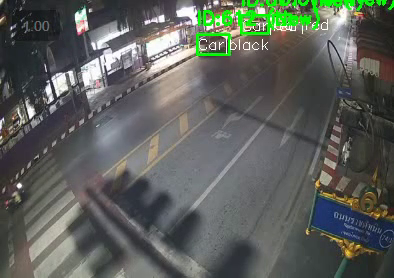
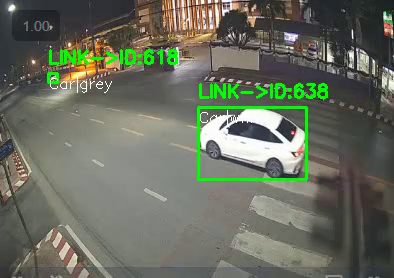
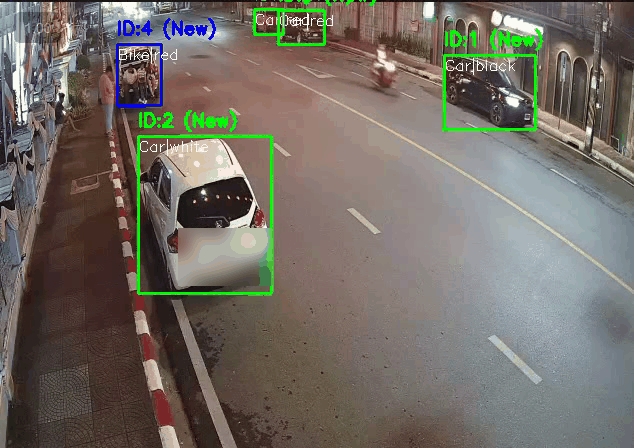
We interviewed border officers and the Signal Department, then planned a camera system that detects people and weapons, finds camouflaged people and recognises actions. The vehicle clips show tracking across two cameras: a car gets an ID in the first view, and the second view links it back to that ID.
Inside the project
- Planned models: YOLOv8 for people and weapons with tracking, YOLOv8-seg for camouflaged people, and YOLOv8-Pose with an LSTM for standing, walking and sitting.
- SAHI slicing into 640 × 640 tiles to find small people in wide camera views.
- Vehicle clips: “ID:n (New)” labels in camera 1 and “LINK->ID:n” labels in camera 2.
- Registration plates are blurred in the public clips.
Skills & practical experience
Framing a real security problem from field interviews, and reading tracker output honestly.
- Computer vision
- YOLOv8
- Object tracking
- Re-identification
- Problem framing
From the team’s three CEPP progress reports (Dec 2025–Jan 2026) and the output clips. The tracking code and datasets are not public, so no accuracy is claimed.
Project context
Coursework that led into our capstone research, Language-Guided Person Segmentation. The clips are real outputs; the matching method is not in the public archive.
Project media