Multimedia Systems · Coursework
Image and Multimedia Processing
Can a video frame be predicted from an earlier one? A MATLAB lab on block matching, image quality and DCT compression.
Course · Lab report
My contribution
I ran the course’s block-matching routines at three search settings, wrote the DCT and quantization pipeline (video_coding.m) and wrote the report.
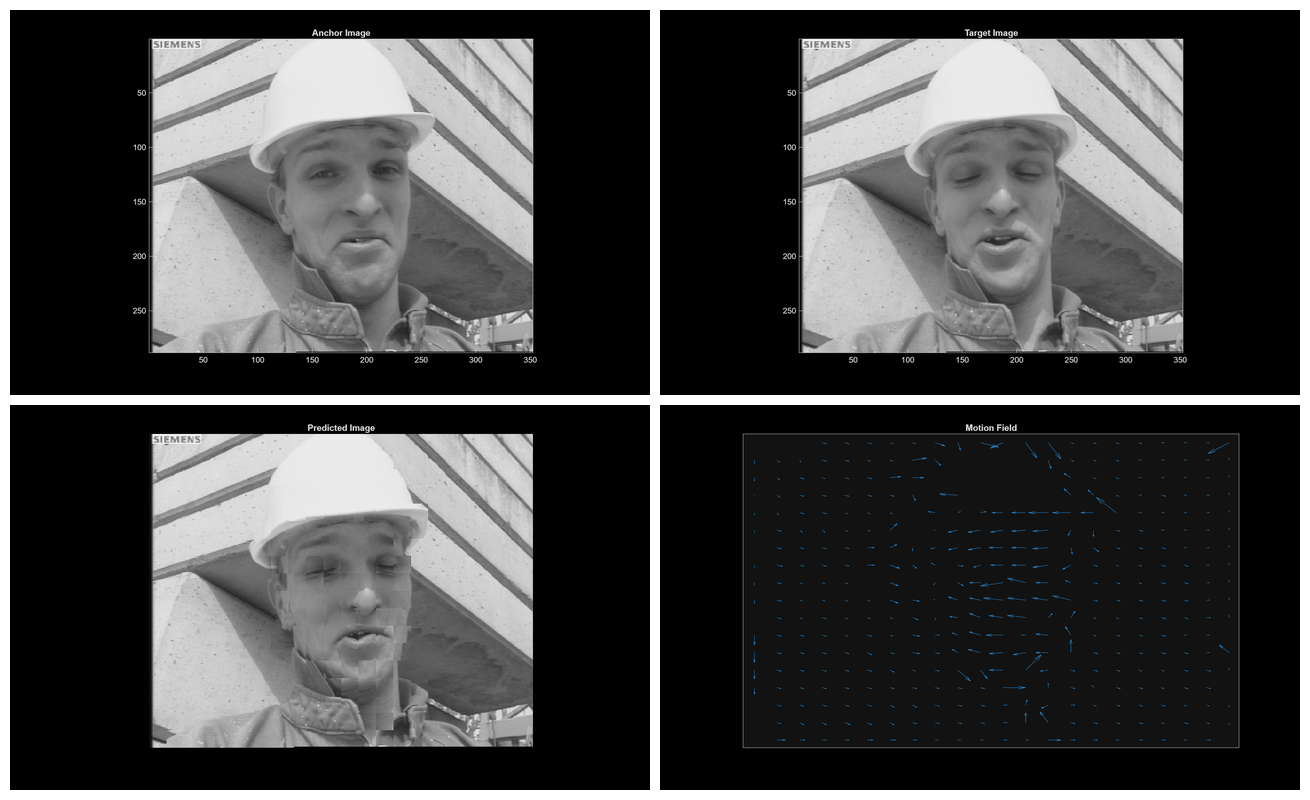
- Compared integer-pixel and half-pixel block matching on frames 66 and 69 of the Foreman test video.
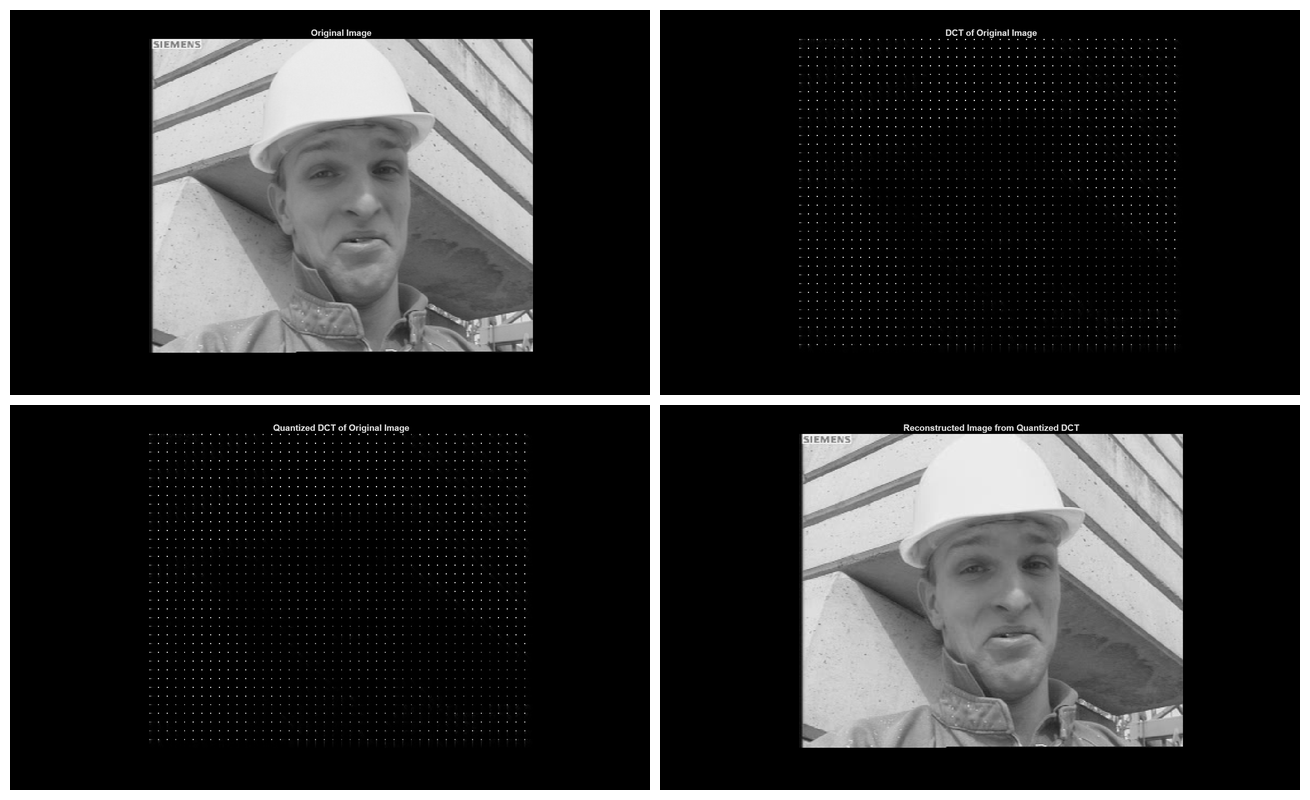
- Wrote video_coding.m: 8 × 8 block DCT and quantization of the frame and of the prediction error.
Try it
See what it can do
KMITL · 01076566 Multimedia Systems · 2025–26 semester 2
What this project does
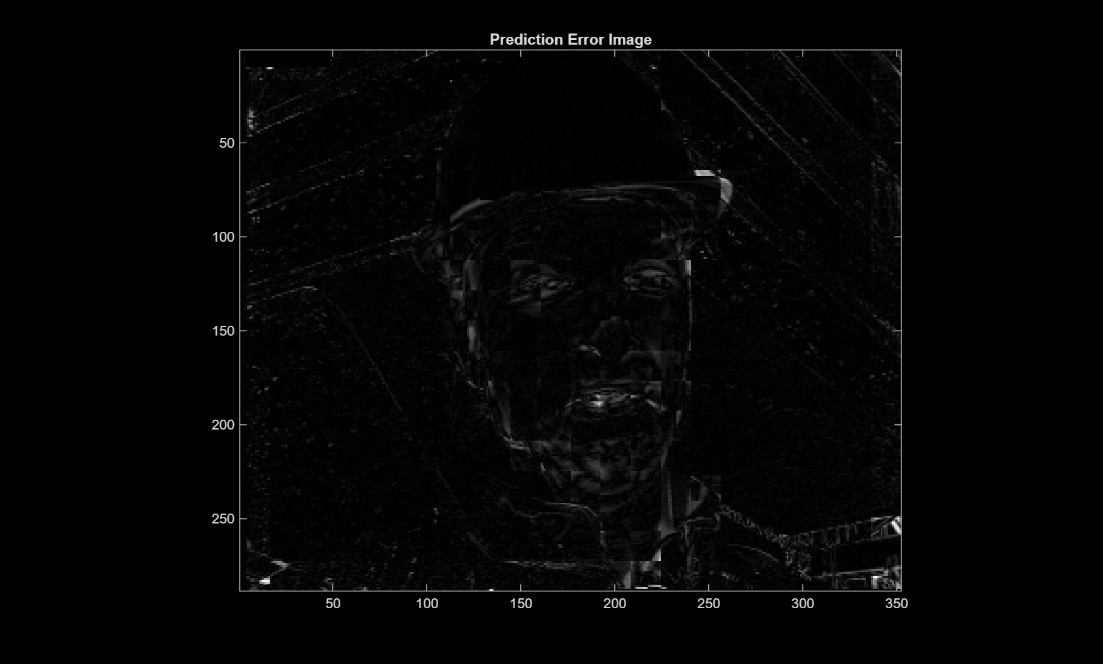
How much of a new frame can be explained by moving 16 × 16 blocks from an earlier frame? The lab compares exhaustive block matching at integer and half-pixel precision, then tests whether the prediction error compresses better than the frame itself.
Inside the project
- Generate a predicted frame, a motion-vector field and a prediction-error image from the two frames.
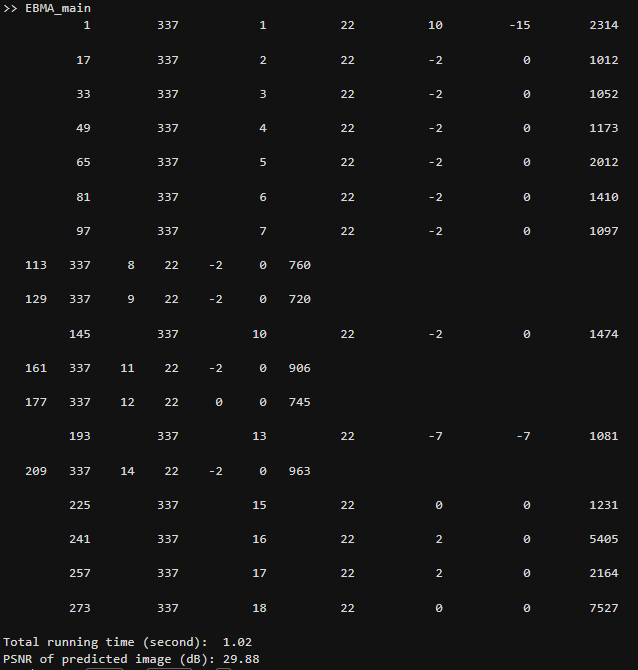
- Compare integer-pixel and half-pixel searches at ±16 pixels, and an integer search limited to ±8 pixels sideways (±16 vertically).
- Apply DCT and quantization to the frame and to the prediction error at Q = 8 and Q = 80.
Skills & practical experience
A visible engineering trade-off: a finer search raises PSNR but costs more time, and prediction leaves a sparser error to compress.
- MATLAB
- Motion estimation
- Block matching
- PSNR
- DCT quantization
- Video coding
From my Multimedia Systems report and the MATLAB scripts in my course archive. The integer ±16 search measured 29.88 dB PSNR in 1.02 s (console output). These results are for this test only, not a codec benchmark.
Project context
A course lab built on course-provided block-matching routines (Yao Wang, 2003); not a trained AI model or a production codec.
Project media