Computer vision research
Language-Guided Person Segmentation
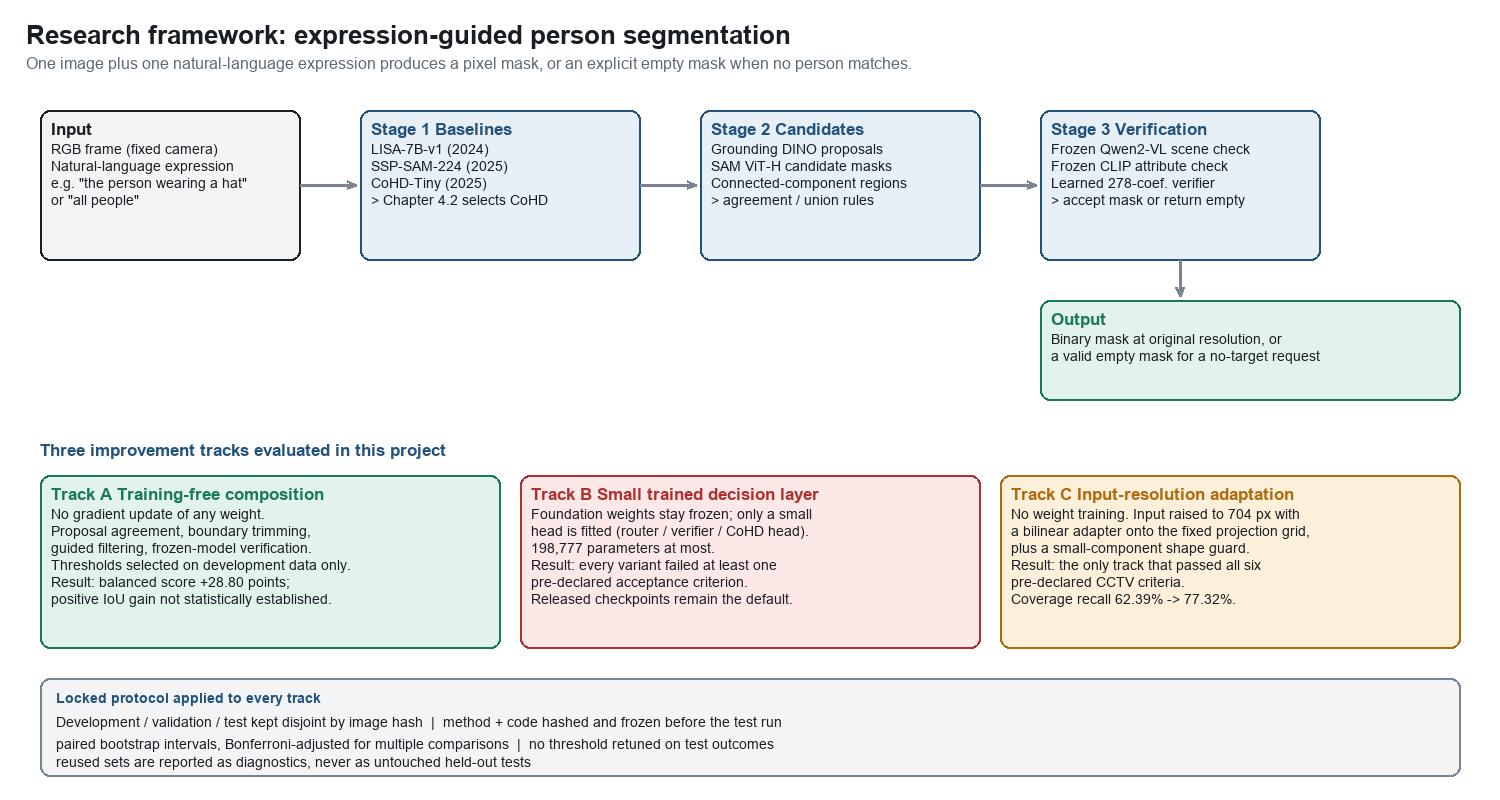
Describe a person in words. The system masks that person in a camera frame, says “no one matches” when nobody does, then answers questions about them.
Research · Team of 3 · LISA language track
My contribution
I owned the LISA language-guided track, which the team’s proposed method A1 builds on. I also ran the CoHD and SSP-SAM baselines, and teammates led the ZoomNeXt and YOLO-World tracks.
- A1 adds Grounding DINO + SAM candidates and a Qwen2-VL check: it correctly said “no one” on 34 of 60 no-match test images, where LISA managed none.
- On images where the person is present, A1 kept LISA’s mask quality (74.44% vs 73.50% IoU) and wrongly returned an empty mask only once in 120.
Try it
See what it can do
KMITL · CE69-27 Project 1 · capstone research · Aug–Nov 2026 · completed
What this project does
Official title: “A Comparative Study and Performance Improvement of Deep Learning Models for Person Detection in Surveillance Imagery.” The team compared language-guided segmentation models on fixed-camera images and proposed A1, which can also return an empty mask when nobody matches.
Inside the project
- Ran five published models — LISA, CoHD, SSP-SAM, YOLO-World + SAM and ZoomNeXt — on one shared 300-image benchmark of everyday photos, street video and camouflage.
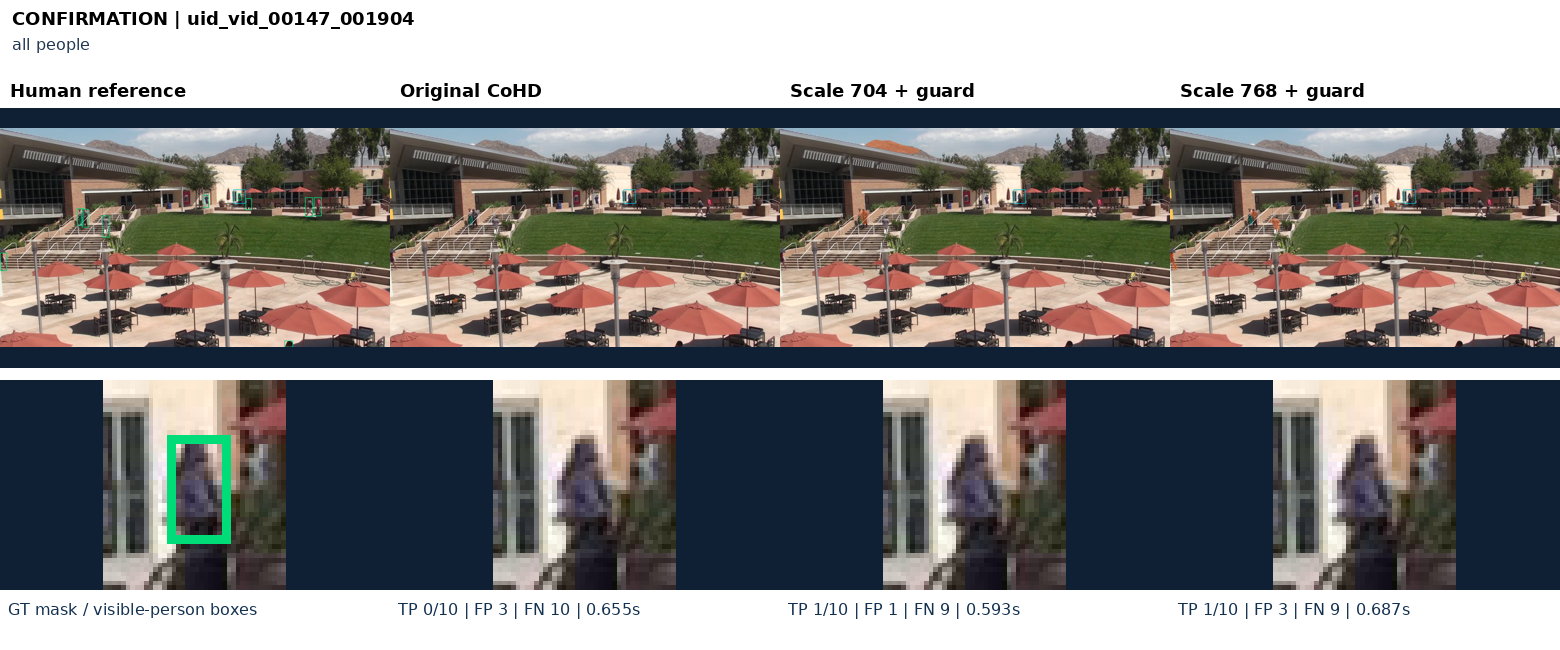
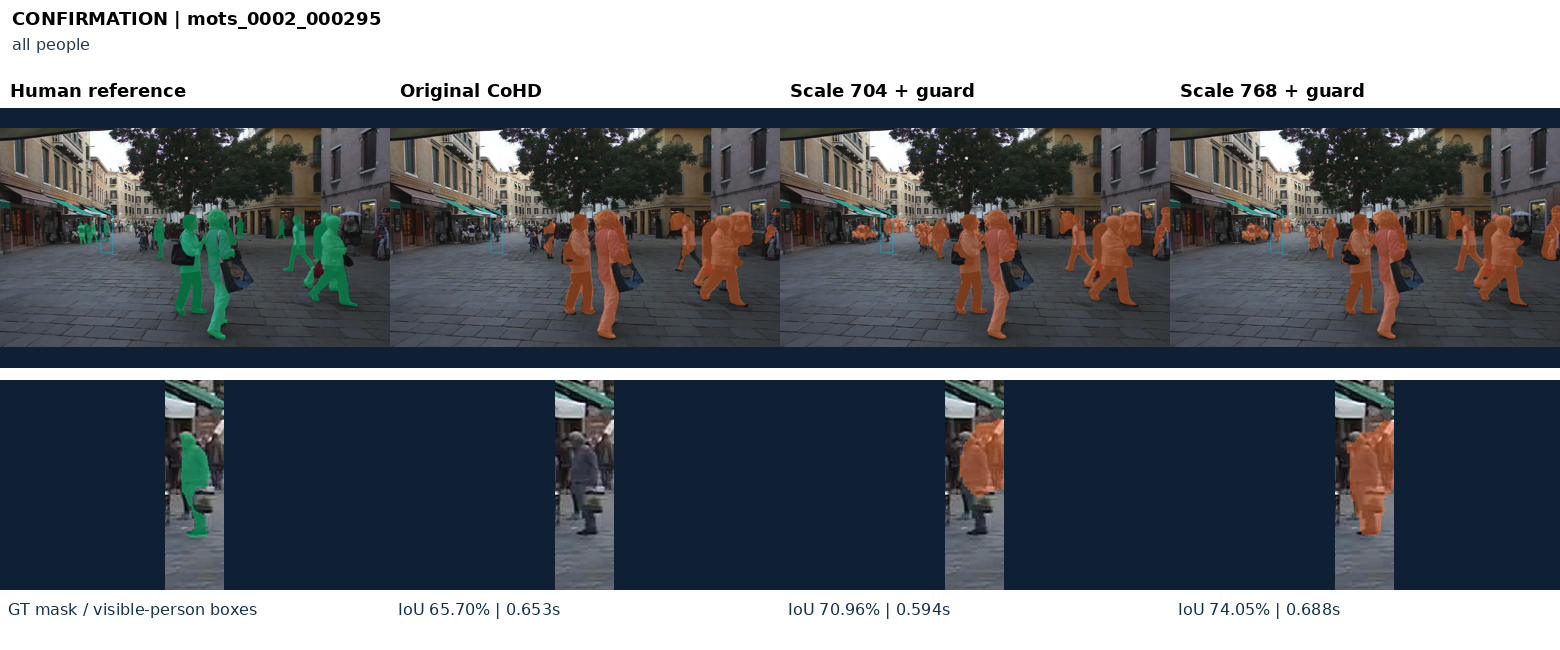
- A higher-resolution CoHD setting covered 549 of 710 people on MOTS20-02 instead of 443, without retraining.
- A second stage answers questions about the selected person with Qwen2-VL-2B.
- Where it started · CEPP pre-project (Dec 2025 – Jan 2026): the same team’s border-surveillance prototype, including vehicle re-identification across two cameras.
Skills & practical experience
Designing fair comparisons across very different models, locking test sets before measuring, and reporting results with their limits.
- PyTorch
- Vision-language models
- Referring segmentation
- Qwen2-VL
- Evaluation design
- Computer vision
Numbers come from the team’s final report (7 November 2026) and its recorded runs. The paper is unpublished; the answers in stage two were not independently scored.
Project context
Graded capstone research (01076311 Project 1) with two faculty advisors. Results hold for fixed daytime cameras and change with the wording of a request.
Project media