Backend · Coursework
FoodBridge
A food-sharing app: people post surplus food, and others book it and pick it up.
Course · Team · One of two backend developers
My contribution
One of two backend developers; teammates designed the app and built the frontend. I set up the Go/Echo service and wrote most of its API; my teammate wrote the booking queue and notifications.
- Sign-in and accounts: JWT middleware, user profiles and share links.
- Food posts, reports, history and sharing stats: money saved, food given and food received.
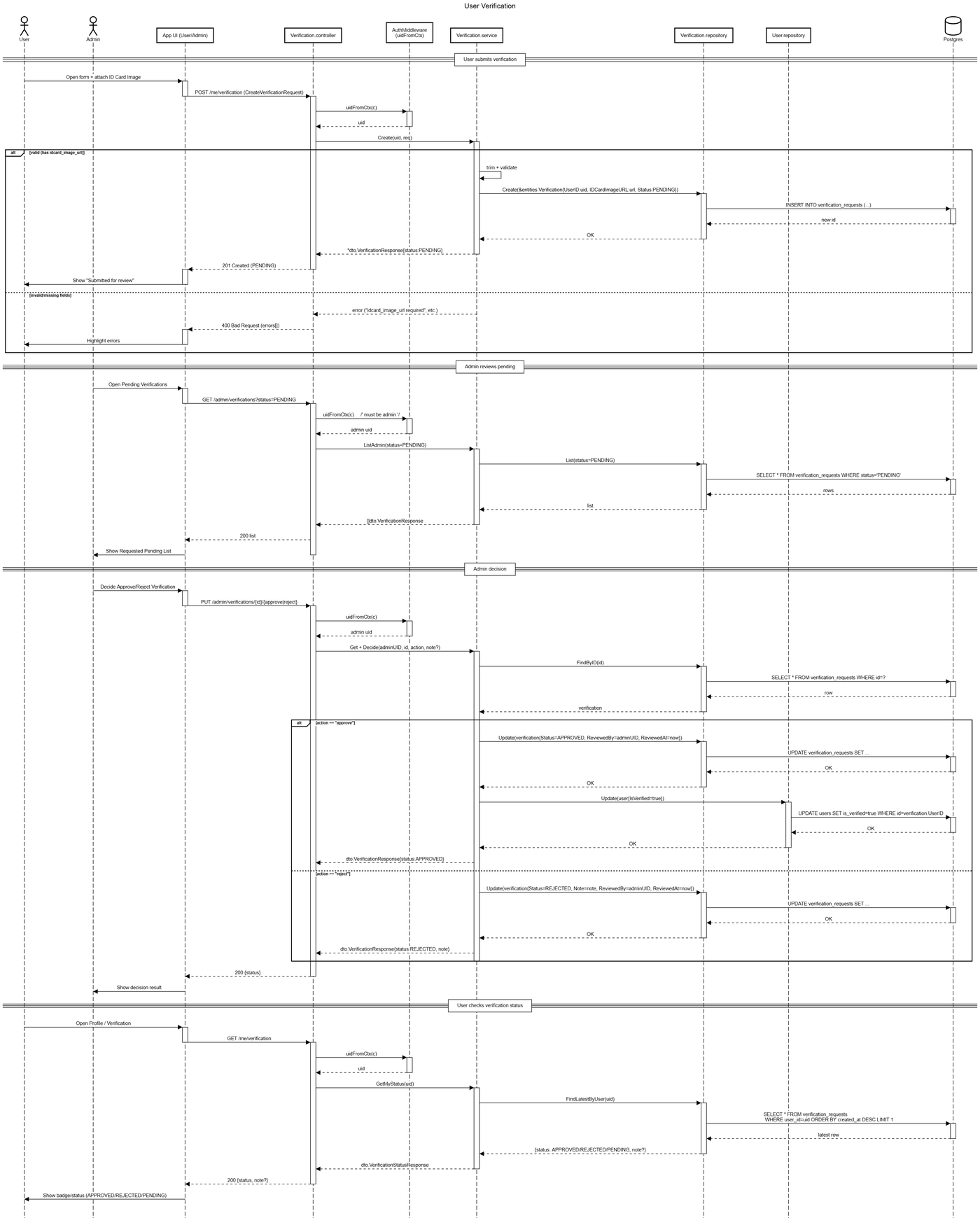
- Identity verification with admin approval, Cloudinary image upload, and Docker Compose for PostgreSQL and MinIO.
Try it
See what it can do
KMITL · 01076035 Software Development Process in Practice · Sep–Nov 2025
The problem
A food-sharing app has to keep accounts, posts and bookings consistent, and let only the right person act on each one.
What this delivers
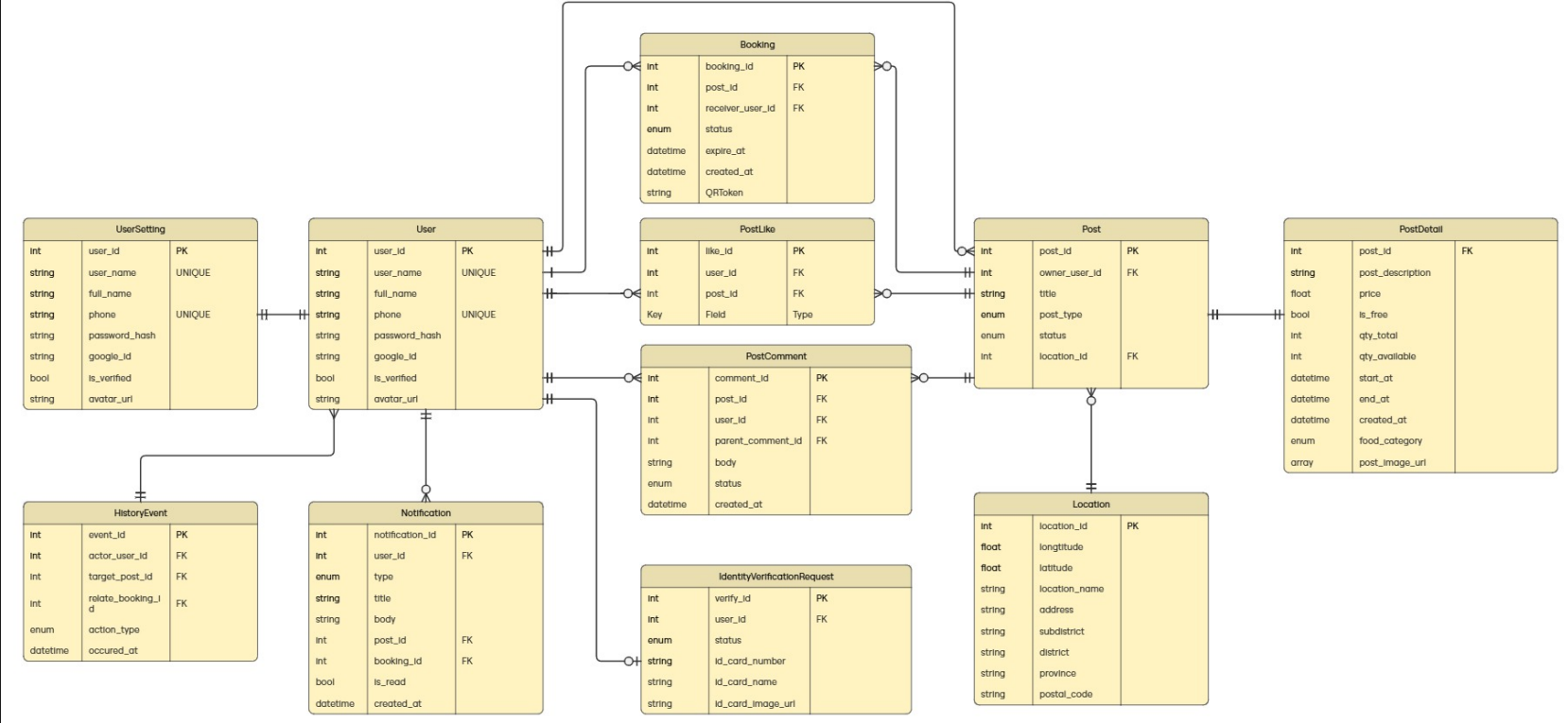
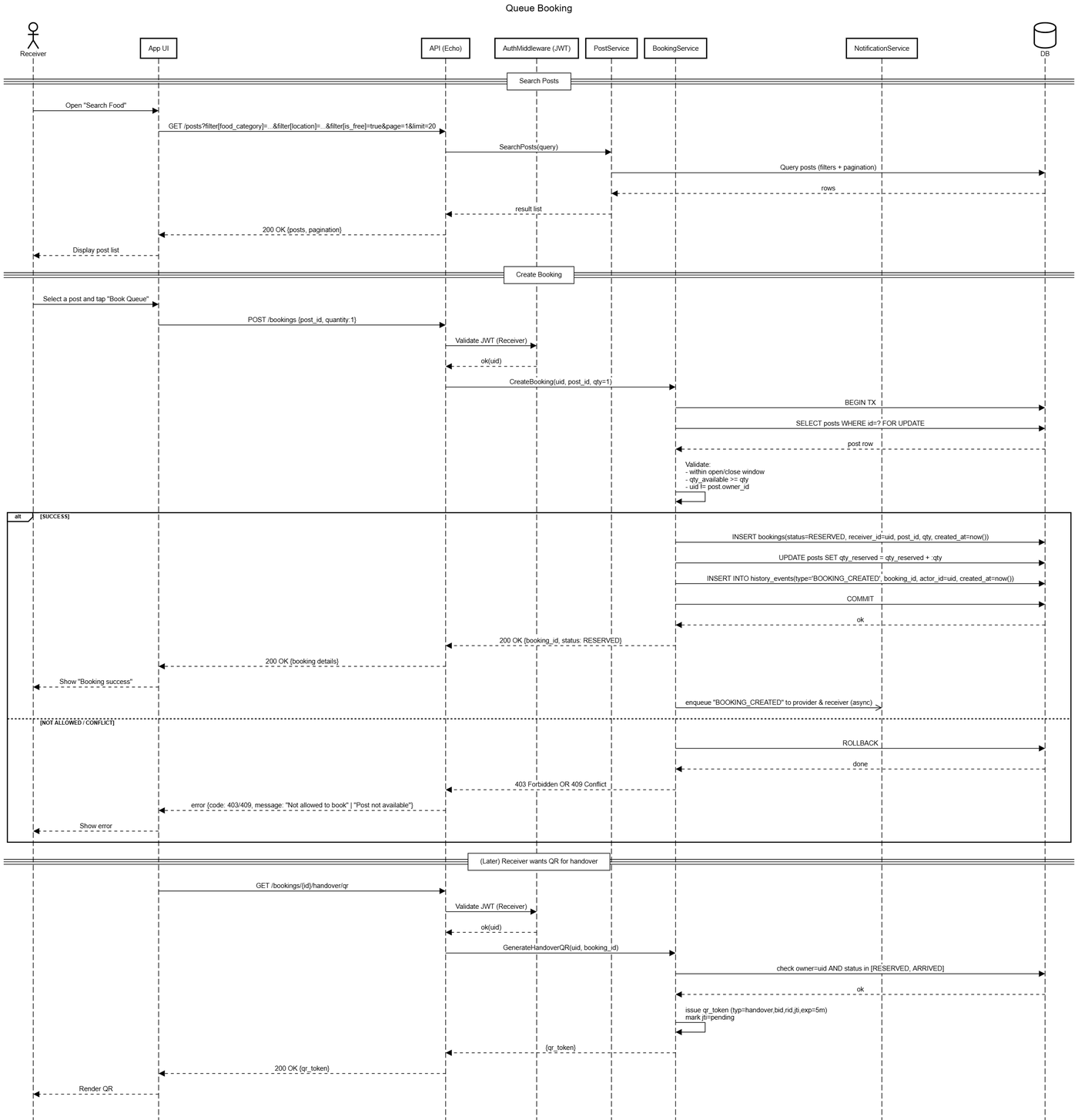
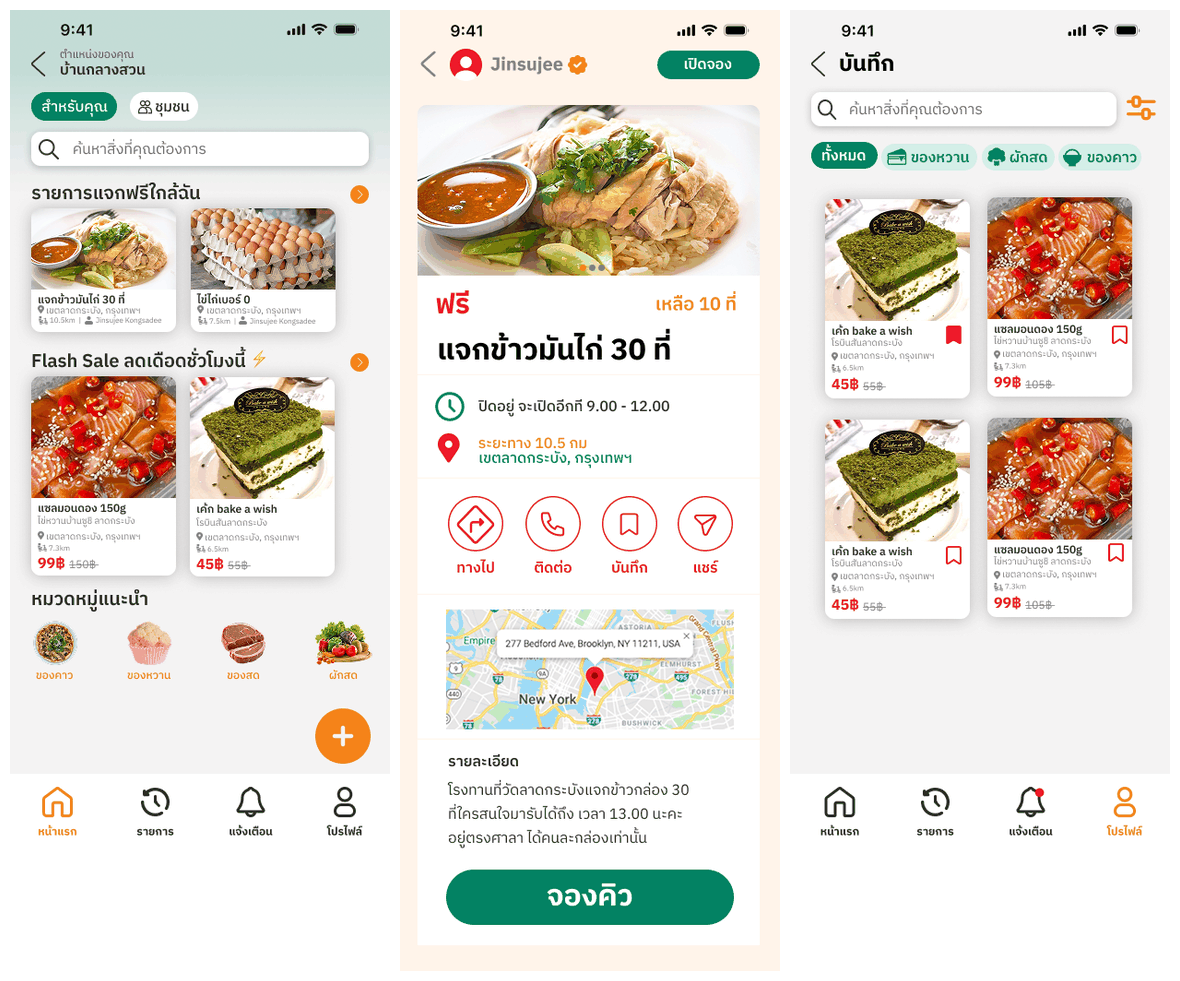
A layered Go API with JWT-protected routes, profiles, posts, reports, identity verification and image upload, plus a teammate’s booking queue. App screens, an ER diagram and sequence diagrams show the design.
What this project does
People post food they can share; others reserve a portion and pick it up. The backend keeps accounts, posts, bookings, comments, reports and notifications consistent for the mobile app.
Inside the project
- A layered Go service: routes, handlers, services and repositories over PostgreSQL with GORM.
- Admins approve identity checks, and verified users are marked in the app.
- A teammate’s booking queue holds a portion for a short time and offers it to the next person when a hold expires.
Skills & practical experience
Designing a REST API with clear layers and ownership, and splitting a backend cleanly between two developers.
- Go
- Echo
- REST APIs
- PostgreSQL
- GORM
- JWT
- Docker Compose
From the public Go repository: 32 of its 60 commits are mine. App screens and diagrams come from the course archive.
Project context
Coursework; the app was not launched. The screens are the team’s app design.
Project media